
What Changes in the Violence and Harassment Policy with Ministerial Decision 95/2026: From Legislation to Practice
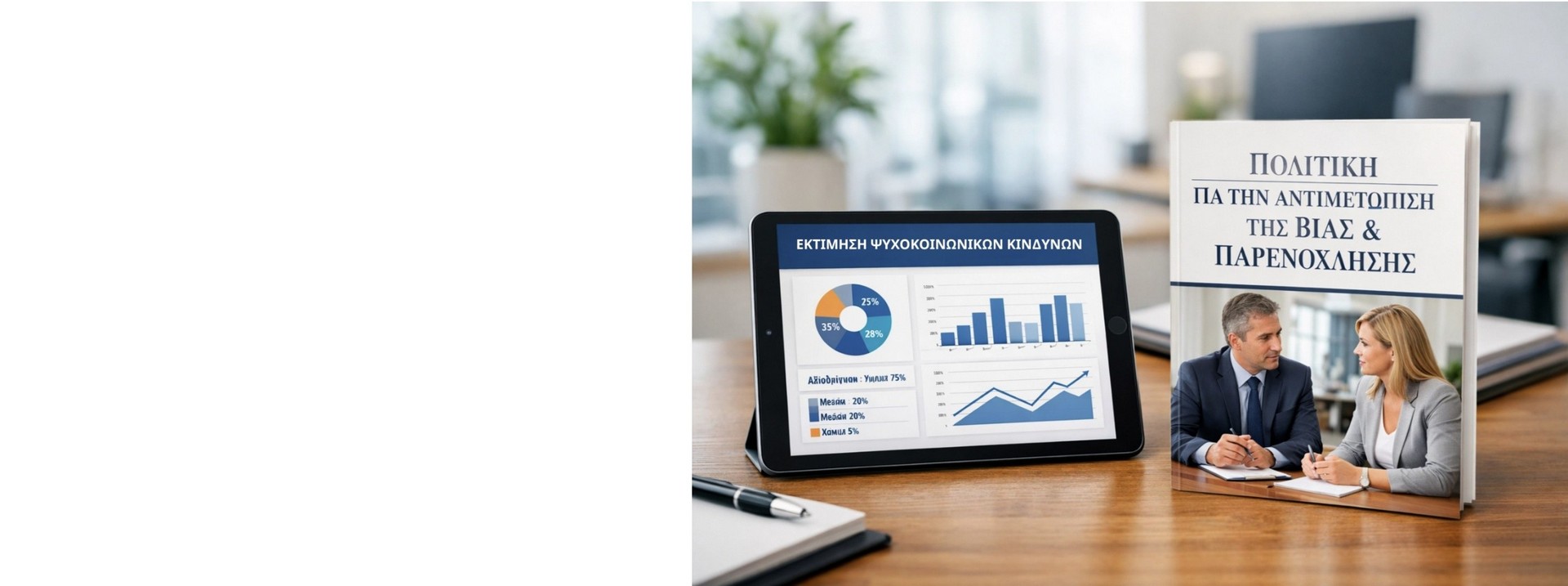
January 2026 brings significant developments to the world of work in Greece with the publication of Ministerial Decision No. 95/2026 (Government Gazette B’ 1/08.01.2026). This decision, issued pursuant to the new Labor Code (Presidential Decree 62/2025) and Law 5239/2025 “Fair Work for All,” reshapes and strengthens the framework for combating violence and harassment in the workplace.
For businesses, this development signals the need for a systematic update of their internal policies.
What Does the New Decision Include?
Ministerial Decision 95/2026 replaces the previous Ministerial Decision 82063/2021, providing a new, more detailed and updated policy template for the prevention and management of violence and harassment. The key points of the new Decision are as follows:
- Expanded Scope of Protection: The new decision clearly broadens the scope of protected people. In addition to employees, it now explicitly covers trainees, volunteers, former employees, job applicants, and even workers in the informal economy. This requires businesses to review their policies to ensure full compliance.
- Mandatory Integration of Psychosocial Risk Assessment: One of the most critical changes is that the “Assessment of Risks of Violence and Harassment at Work” now becomes an integral and mandatory part of the Policy. This means that businesses must systematically identify and assess risks, taking into account factors such as gender, age, and characteristics that may constitute grounds for discrimination, and the specific needs of vulnerable groups.
- More Detailed Procedures: The new policy requires more comprehensive prevention, control, and response measures, as well as clear procedures for receiving and investigating complaints, ensuring the protection of victims and the maintenance of confidentiality.
- Clarified Responsibilities of Third-Party Employers: For businesses using temporary employment agencies or employee secondment arrangements, the decision clarifies the responsibilities of both the direct and indirect employer, providing greater legal certainty.
What Should Businesses Do?
Although policies adopted under the previous Ministerial Decision 82063/2021 remain in force, updating them is recommended to ensure full compliance and alignment with best practices. Key steps include:
- Review and Update the Policy: Examine your existing policy and incorporate the required risk assessment while broadening the scope of protection.
- Systematic Risk Assessment: Conduct or update the Psychosocial Risk Assessment, focusing on risks related to violence and harassment, and considering all factors mentioned in the decision.
- Consultation: Follow the prescribed consultation procedures with employee representatives or employees themselves, where required under the new Decision.
- Information and Training: Ensure that all staff are informed about the new policy and procedures through training programs and awareness initiatives.
The Importance of Compliance
Compliance with the new legislation is not merely another legal obligation, but an opportunity for businesses to create a healthier, safer, and more productive work environment. An environment where violence and harassment have no place, enhancing employee well-being and corporate reputation.
Ergonomia, with its expertise in occupational health and safety, stands by businesses to guide them through this critical process. Through the comprehensive services of our ErgoWell-Being department—such as the development of tailored Violence and Harassment Policies and the implementation of specialized Psychosocial Risk Assessments—we ensure full compliance and the protection of your workforce.
Contact us at well-being@ergonomia.gr to learn how we can support your organization.
References
- Ministerial Decision No. 95/2026
- Presidential Decree 62/2025 (Labor Code)
- Act No. 5239/2025 “Fair Work for All”