
Trauma, bleeding
First aid:
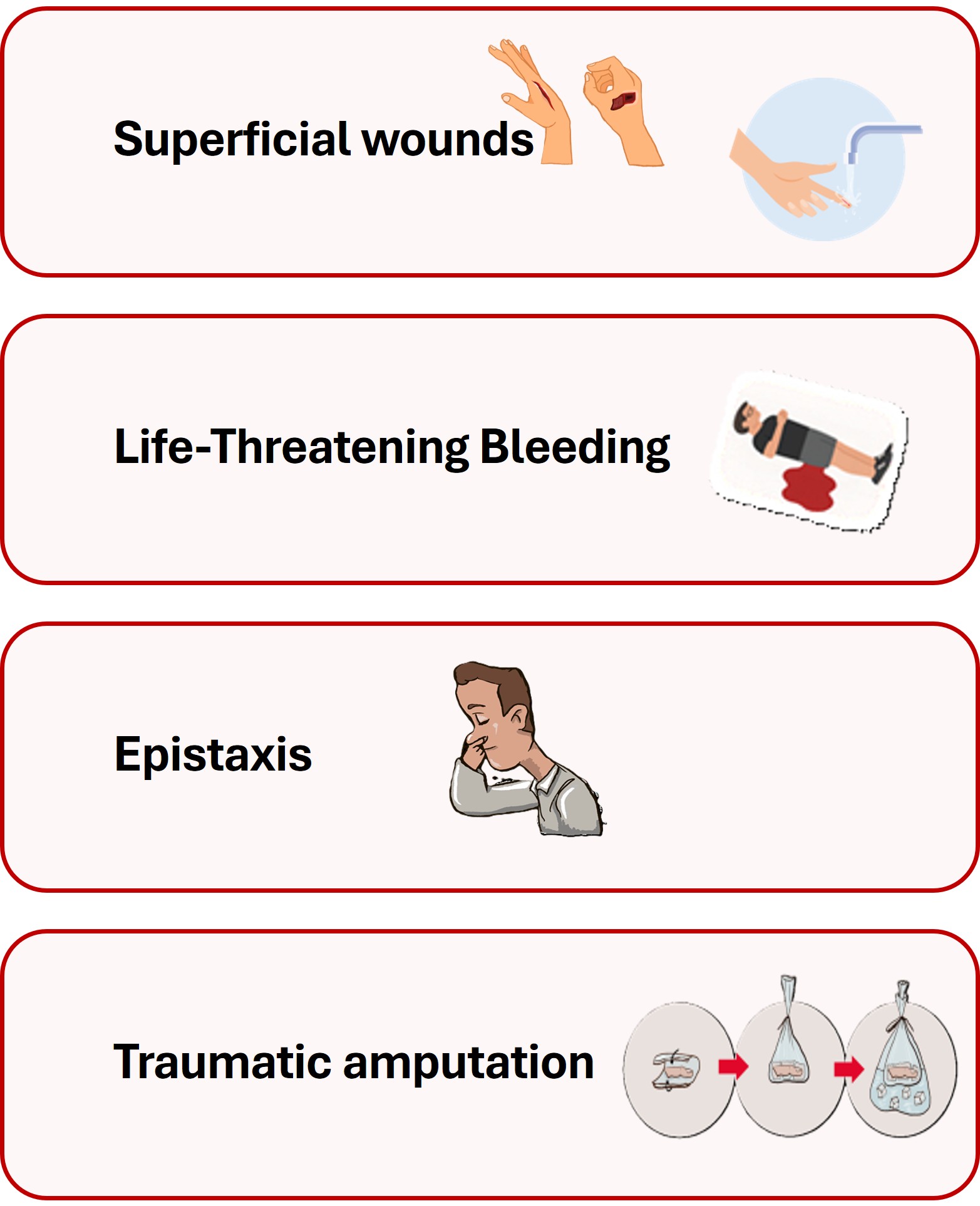
- Rinse the wound with running tap water/ sterile saline solution to remove obvious debris. Wounds caused by an animal or human bite need medical advice. Cover with an occlusive dressing to promote wound healing. In the presence of signs/symptoms of infection, remove the dressing, inspect the wound, and obtain medical care.
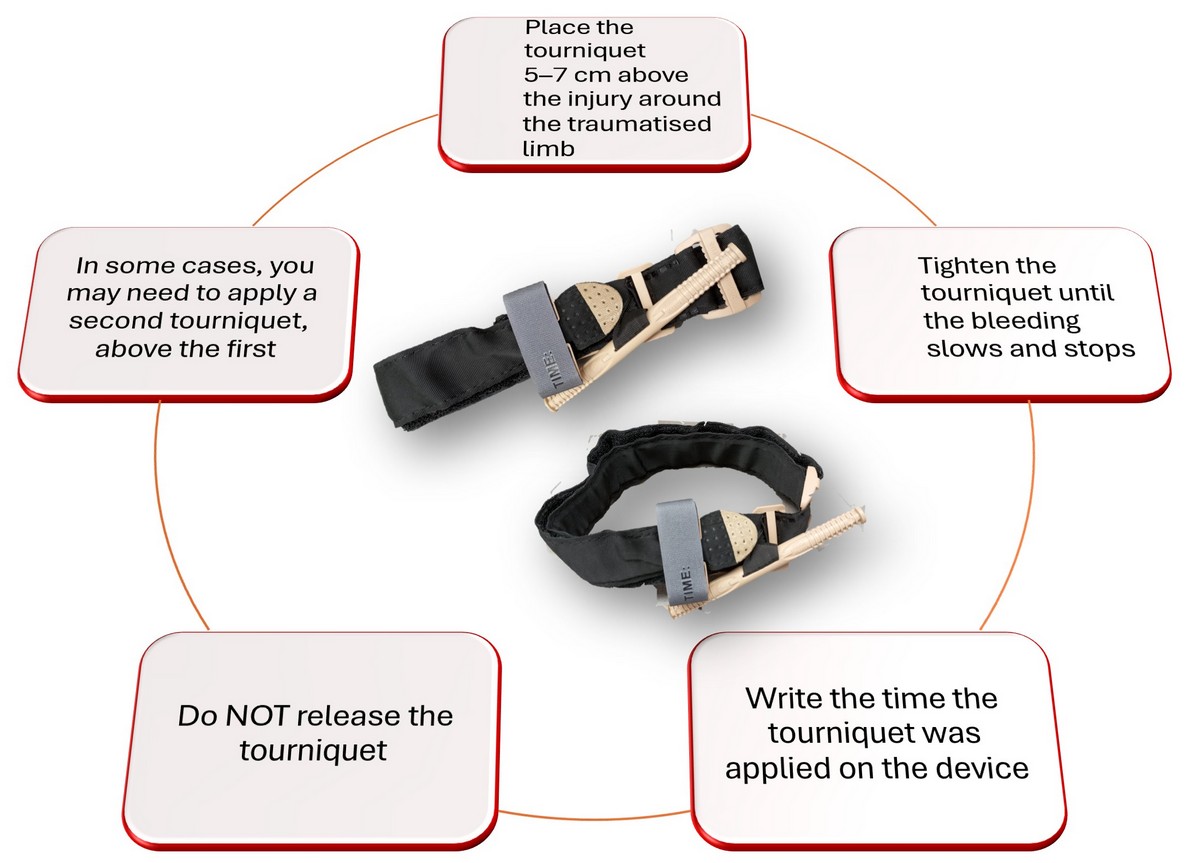
- Apply firm direct manual pressure to the bleeding injury. Add additional gauze or haemostatic dressing and continue applying pressure to the wound. Once bleeding is controlled, apply a pressure dressing to maintain bleeding cessation. If the bleeding cannot be controlled, apply a manufactured tourniquet and write the time of application. Call for help 112/166.
- Sit with the head slightly forward and pinch the nostrils for 10 to 15 minutes. Seek help 112/166 if epistaxis does not stop after 15 minutes of continuous manual pressure or becoming lightheaded, if there are signs of brain injury, obvious nasal deformity, or signs of facial fracture and also if the person is taking anticoagulant or antiplatelet medication, or has a blood-clotting disorder, unless bleeding has stopped.
- Manage any severe bleeding first. Wrap the part in a sterile dressing or a clean cloth moistened with saline or water. Place the wrapped part in a clean watertight plastic bag or container. Put the bag or container holding the body part, inside another bag containing ice or ice-water. Call for help 112/166.
Life-Threatening Bleeding: Turniquet
Life-threatening bleeding can be recognized by:
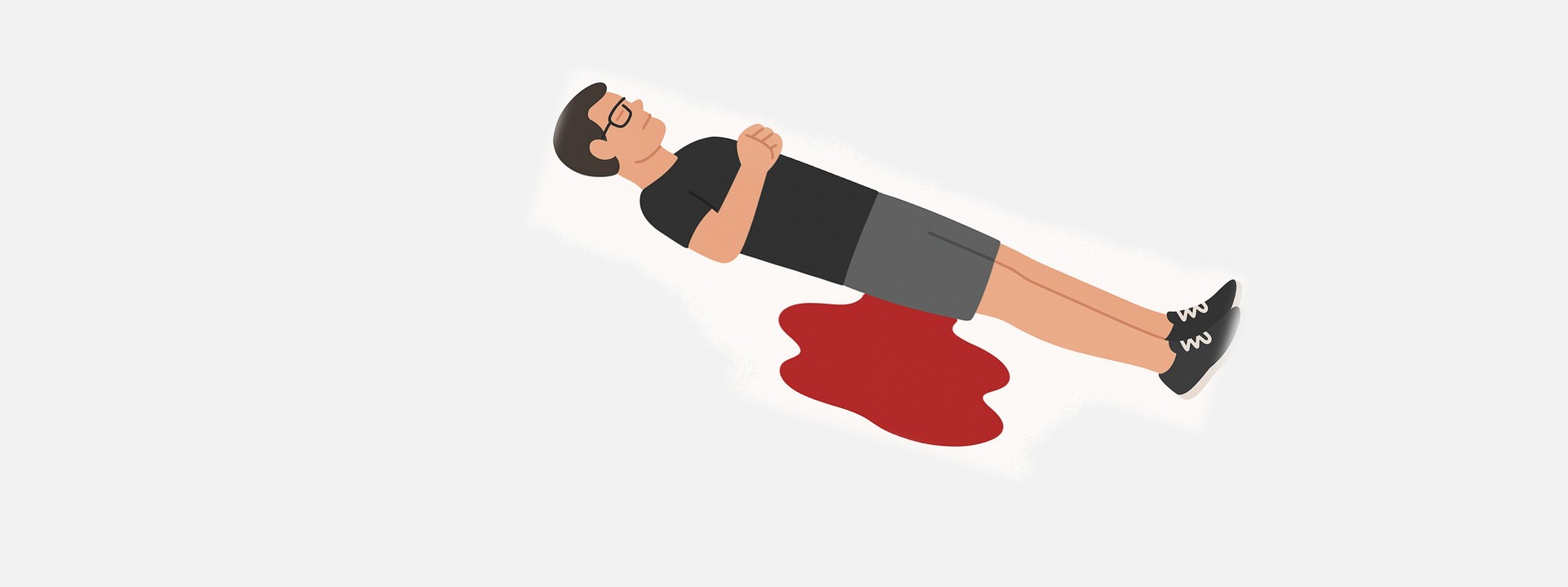
- pooling of blood on the ground
- blood that is rapidly flowing or spurting from the wound
- bleeding that continues despite direct manual pressure
- bleeding that results in systemic symptoms such as drowsiness, dizziness, chest pain, loss of consciousness
_____________________________________________
Sections:
- First Aid
- Basic Life Support in adults
- Basic Life Support in children
- Recovery position
- Choking- Heimlich Maneuver
- Heart Attack
- Stroke
- Epileptic Seizure
- Panic Attack
- Trauma, bleeding
- Burns
- Electrocution
- Heat stroke
- Strain, Sprain, Dislocation, Fracture
- Snake Bite
- Hymenoptera stings (Wasp/ Bee)
- Anaphylaxis/Allergic shock
Τύπος άρθρου
Οδηγίες